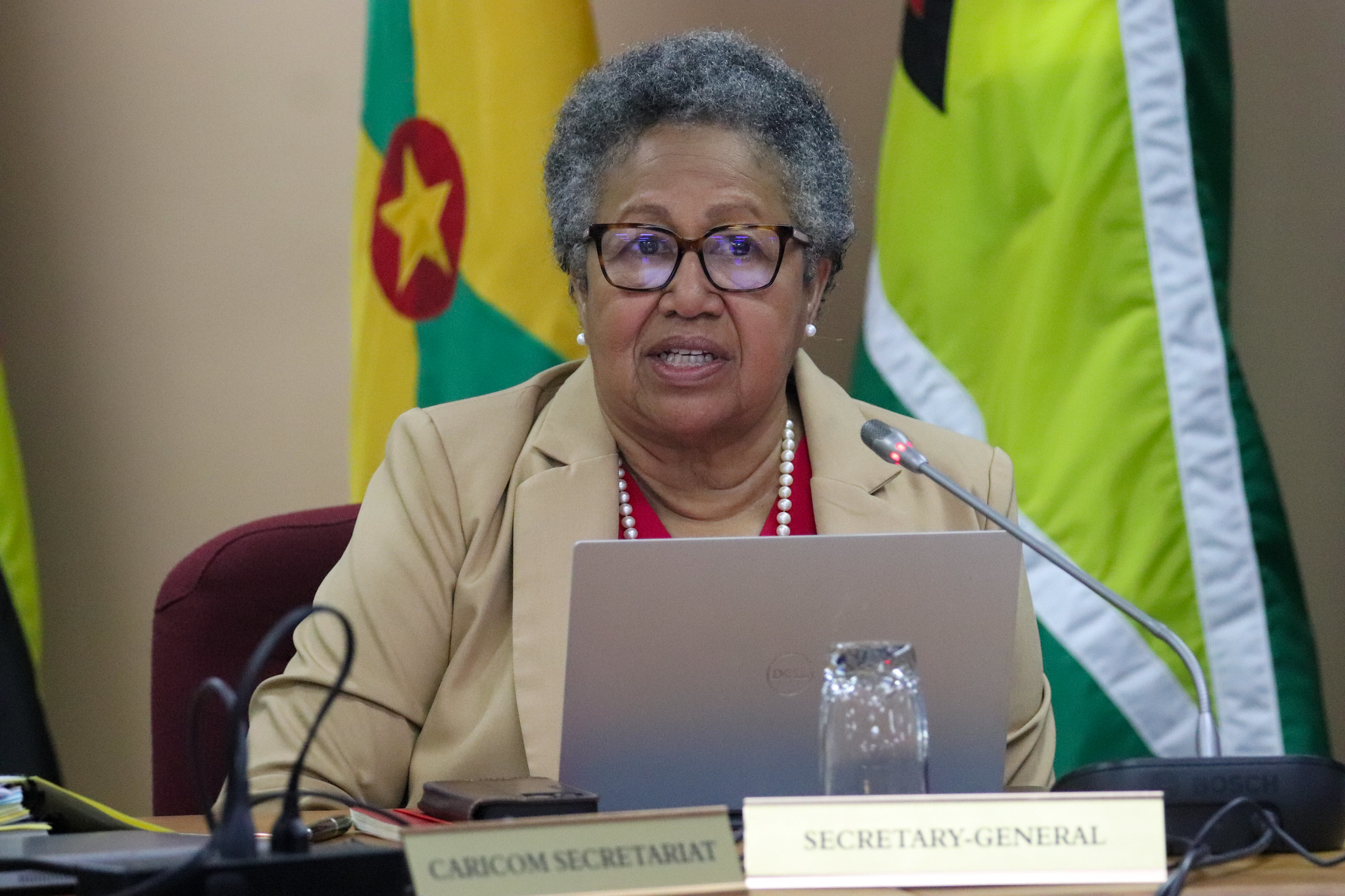
CARICOM stands in solidarity with the global community in commemorating the 16 Days of Activism against Gender-Based Violence (25 November – 10 December). In her message, CARICOM Secretary-General Dr Carla Barnett highlights the urgent need to confront violence against women and girls, including the growing threat of digital abuse. She reaffirms the Region’s commitment to building safe, inclusive societies where every woman and girl can thrive.
Please read her message below:
The Caribbean Community (CARICOM) joins the global community in recognising the 16 Days of Activism Campaign, during which four important days will be observed: the International Day for the Elimination of Violence against Women on 25 November, Human Rights Defenders’ Day on 29 November, World AIDS Day on 1 December and Human Rights Day on 10 December.
The campaign underscores that violence denies women and girls the enjoyment of the full complement of their human rights. CARICOM joins this global call to action against harmful gender norms, impunity, silence and stigma, all of which have allowed violence against women and girls to become normalized in far too many communities.
This year’s theme, “UNiTE to End Digital Violence against All Women and Girls,” addresses thealarming rise of digital violence against women and girls, fueled by artificial intelligence, online anonymity, and weak legal accountability. Despite the internet’s potential for empowerment, women and girls now face increased threats, including cyber harassment, deepfake attacks, and relentless online abuse. UN Women reports that 1.8 billion women and girls lack legal protection from technology-facilitated abuse, with less than 40% of countries having relevant laws. The escalation of AI-driven abuse has made it faster, more targeted and harder to detect, with deepfake pornography disproportionately affecting women.
The rise of the “manosphere”, a network of online communities promoting toxic masculinity and misogyny, adds to the growing threat to gender equality; it negatively affects the mental and physical wellbeing of both women and men, and deters women from participating in digital spaces. With billions of people online, digital platforms are increasingly being used to spread hate, harmful stereotypes, reinforce sexist ideologies and portray feminism negatively among young men and boys. Social media is being used to amplify these divisive messages, causing real-world impacts on attitudes and behaviours, affecting careers, shaping culture, causing fear and contributing to extreme acts of violence.
There is an urgent need to devise effective approaches to counteract toxic online environments. Multifaceted efforts must include research, policy advocacy, support for survivors, public education about gender equality and healthy relationships, youth-focused programs, digital literacy and cultural change. Emphasis should continue to be placed on legislative reform; hiring of more women in the digital space; swift removal of harmful content; and deceleration of the spread of misogynistic ideas.
According to the United Nations, one in three women worldwide has experienced physical or sexual violence during their lifetime, most often at the hands of an intimate partner. Prevalence surveys conducted between 2017-2019 in five CARICOM Member States, sampling women and girls 15-64 years old, indicate incidence rates as high as one in two women. The social and economic consequences are concerning, with potential costs in healthcare, legal services and lost productivity. This underscores the need for a comprehensive response in our countries.
CARICOM Member States have been implementing measures to address violence against women and girls by promoting gender equality, strengthening legal frameworks and enhancing support systems for survivors. The CARICOM Secretariat remains committed to supporting Member States in developing and implementing polices to prevent and respond to violence against women and girls, including through facilitating training of frontline professionals, including police, healthcare workers and social service providers, to better respond to cases of gender-based violence.
Today we honour the courage of survivors, amplify their voices, and commit to remain united in the pursuit of justice and equality. The eradication of violence against women is not only a moral and vital human rights imperative, but a prerequisite for sustainable development and prosperity. In a Region of some 16 million people, more than half of whom are women and girls, we are individually and collectively responsible for creating safe, inclusive, and equitable societies, where every woman and girl can live free from fear and violence.