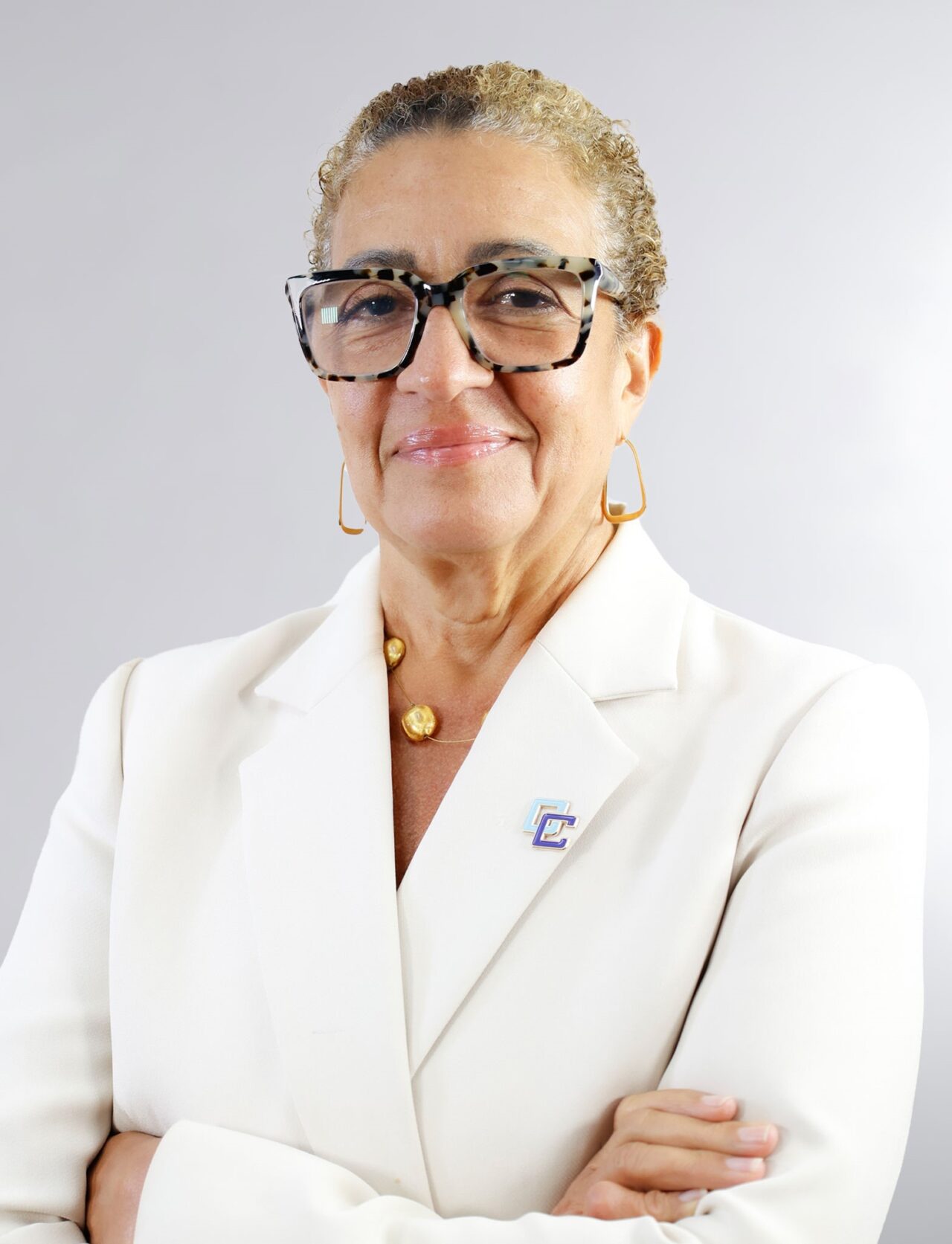
CARICOM Assistant Secretary-General for Foreign and Community Relations, Elizabeth Solomon, addressed the CARICOM–UNDP High-Level Meeting on Addressing Crime and Violence as a Regional Challenge: Integrating Health, Justice, and Social Policy.
In her remarks, Solomon underscored the urgent need for a coordinated regional response to violent crime, which she described as a scourge undermining economic growth, social development, and the well-being of Caribbean citizens, particularly young people.
She noted that while several initiatives have been implemented across the Region, including community resilience programmes, youth projects, mental health interventions, and justice sector reforms, crime statistics remain deeply troubling. The challenge, she emphasised, is scaling up successful national programmes into a strategic regional framework.
The UNDP has identified organised crime as a major threat to security, governance, and human development in the Caribbean, given the Region’s role as a transhipment route for drugs, weapons, and people. The UNDP’s Regional Human Development Report highlights the need to link governance, justice, and community security to address these pressures.
On CARICOM’s side, Heads of Government have advanced the issue through a series of Regional Symposia on Crime and Violence, producing key declarations such as the George-Bridge Declaration and the Needham’s Point Declaration. These frameworks recognise violent crime as not only a legal problem but also a social and economic one and call for a public health approach to prevention.
The current meeting builds on the CARICOM–UNDP Memorandum of Understanding (2022–2027) and its 2024 Action Plan, aiming to strengthen institutional and community capacities, mobilise resources, and foster collaboration across health, justice, and social sectors. Solomon stressed the importance of developing a Resource Mobilisation Roadmap and harnessing the creativity and commitment of Caribbean youth in shaping solutions.
“This is a meeting of minds around an issue that is challenging our Region in a myriad of destructive ways,” she said, urging participants to lead the way through meaningful discussion and collective action.
Please read the ASG’s complete speech below:
Salutations
Ladies and gentlemen, this is an important meeting. This is a meeting of minds around an issue that is challenging our region in a myriad of destructive ways. Not only is violent crime in and of itself a scourge that is wreaking havoc upon the lives of excessively large numbers of citizens of the Caribbean Community, crime and violence has stunted our economic growth, it profoundly undermines the fulsome development of our societies and already affects the health and wellbeing of our young people and even future generations.
We are not breaking new ground here by any means. This is not a recent refrain. Already there have have been a slew of helpful and somewhat successful responses backed up by resources, such as the Citizen Security programme here in Trinidad funded by the IDB, which focused on community resilience and alternative dispute resolution skills among other things. In fact, there have been a wide range of initiatives undertaken by various invested stakeholders, including CARICOM and the United Nations that encompass mental health programmes, Youth projects, collection of critical and transformative Crime and violence data, multi sectoral approaches to gender based violence and criminal justice training and reform, particularly focused on backlog reduction and interoperability along the justice chain. Yet, as we all know, the violent crime statistics remain of grave concern.
The question we must urgently explore is how do we scale up some of these nationally successful programmes and what would be a strategic regional approach that brings together all these different relatively small scale initiatives.
The United Nations Development Programme working in the Caribbean has identified that Organized Crime continues to threaten security, governance, and human development across the Caribbean. As a key transshipment route for drugs, weapons, and people, the region faces compounding social and economic pressures that weaken institutions and undermine public trust.
The UNDP Regional Human Development Report (HDR) for Latin America and the Caribbean highlights the urgent need to address violence, insecurity, and institutional fragility as core development challenges and identifies the importance of linking governance, justice, and community security.
On CARICOM’s side, the Heads of Government have been ceased of this issue in a meaningful and coordinated way. The first Regional Symposium on Crime and Violence as a Public Health Issue, which took place here in Port of Spain brought together all the Heads of Government. The Second Regional Symposium on Crime and Violence did the same and produced the George-Bridge Declaration that identified the beginnings of a multi-sectoral framework for the way forward, including an agreed definition of a “Public Health Approach” and the appointment of a “High Representative on Law and Criminal Justice” to strengthen law enforcement and enhance efficiency in the criminal justice sector. He joins us here today. The Third Regional Symposium on Crime and Violence will take place as an adjunct of the Heads of Government meeting in St Kitts and Nevis in February next year. In other words, this meeting of minds over the next two days is very timely.
The CARICOM–UNDP MOU (2022–2027) and its 2024 Action Plan provides the policy framework for collaboration to operationalizes priorities from the CARICOM Regional Symposiums. The George-Bridge Declaration puts meat on the bare-bones priorities of the first Regional Symposium and the important recommendations of the Needham’s Point Declaration which, critically in the scheme of our cross-sectoral thinking, was the initiative of the Caribbean Court of Justice and acknowledged that that violent crime is not just a legal problem but a social and economic one.
This meetings stems from the objectives of this collaborative engagement between CARICOM and UNDP to support the development of a regional programme concept that strengthens institutional and community capacities to prevent and respond to organized crime while mobilizing new resources for implementation.
Our remit at this High Level meeting is to explore how criminal justice reforms, aligned with the 2023 Needham’s Point Declaration and the 2024 George-Bridge Declaration can serve as a catalyst for crime prevention, social reintegration, and community resilience for fostering collaboration among the health, justice and social actors. We must seek to advance human rights based approaches and establish a united regional framework that positions the reduction of violent crime as both a public health and justice reform priority, grounded in evidence and inclusive development. The discussions our collective minds generate will also support the development of an integrated regional programmatic approach and contribute to an analytic brief linking organized crime dynamics to human development, governance, and social inclusion and identifying the practical mechanisms necessary for change, such as a justice sector reform that informs, and is informed by, the data that a public health approach can provide.
In the current environment where multilateral engagements are not as straightforward as they ought to be, and international donor partners are themselves severely constrained, we must match our thinking on the substance with a pragmatic development of a Resource Mobilization Roadmap identifying partners, funding streams, and synergies with ongoing UNDP and CARICOM initiatives.
We must harness the powerful capacity of our exceptional young people by giving them a solid foundational plan to follow. Young people such as Denyce Blackman who has produced an excellent analysis of why the Needham’s Point Declaration matters to the citizens of the Caribbean Community; or UNDP Trinidad’s Kwesi Hamilton who creates space for other young voices and works on innovative projects like the Psychosocial Art and Sports Model for PeaceBuilding; or Reyanna Sankar – a former Human Rights Law student of mine, who now advises the Government of St Kitts on justice reform; and all the CARICOM Youth Ambassadors who demonstrate powerful commitment to the development of this region across various disciplines.
Let us lead the way through meaningful discussion.
Thank You